
Air Tightness Testing for Public Sector Buildings
Public sector buildings have a lot to deal with.
Schools, hospitals, council buildings, and government sites all need to stay safe, comfortable, efficient, and compliant — often while being used every day.
That means energy performance can’t just look good on paper. It needs to work properly in real life.
We help public sector teams understand how their buildings are performing, where energy is being lost, and what needs improving to support compliance, comfort, and long-term running costs.
Why Public Sector Buildings Need Clear Performance Data
Public sector buildings are often complex.
You may be dealing with older buildings, mixed-use spaces, phased upgrades, limited budgets, and high occupancy.
Common issues we see include:
- Heat loss through ageing building fabric
- Poor airflow in busy spaces
- Ventilation that doesn’t perform as intended
- Inconsistent temperatures across different rooms or areas
- Higher-than-expected energy use
These issues can lead to:
- Higher operational costs
- Reduced comfort for occupants
- Damp, condensation, or poor air quality
- Difficulty proving compliance
- Pressure on maintenance budgets
Testing gives you the evidence needed to make better decisions.
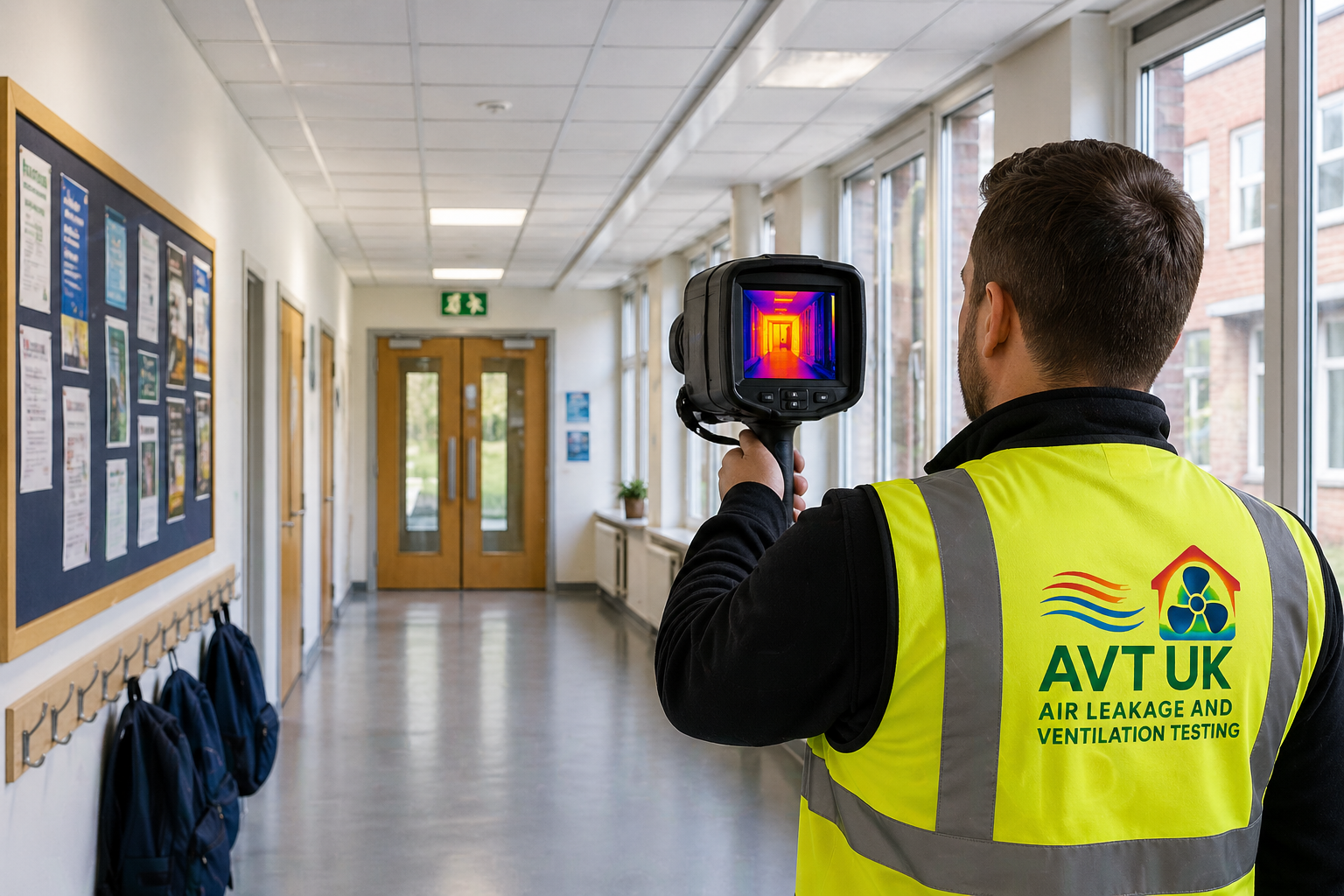
Air Tightness Testing For Public Sector Buildings
Air tightness testing measures how much uncontrolled air is leaking through the building.
In public sector buildings, this can affect:
- Energy performance
- Heating and cooling costs
- Occupant comfort
- Compliance with building standards
Our testing helps you:
- Identify where energy is being lost
- Support energy efficiency improvements
- Improve comfort across the building
- Meet air tightness and energy compliance requirements
- Plan works based on real evidence
We explain the results clearly, so your team understands what’s happening and what needs to happen next.
What Happens During a Test?
We use specialist testing equipment to measure how air is moving through the building.
The process usually involves:
- Setting up calibrated testing equipment
- Pressurising and depressurising the building
- Measuring air leakage rates
- Identifying likely areas of air loss
- This gives you a clear picture of how the building is performing in real conditions.
For public sector estates, that evidence can help prioritise improvement works and avoid wasting budget on the wrong fixes.
Energy Efficiency And Sustainability Support
Public sector organisations are under increasing pressure to reduce energy use and improve sustainability.
We support this by helping you understand where buildings are underperforming and which improvements are likely to have the biggest impact.
This can help you:
- Reduce avoidable energy waste
- Lower long-term operational costs
- Support sustainability targets
- Improve comfort for staff, patients, pupils, visitors, or building users
- Make evidence-led decisions across your estate
Ventilation Compliance And Indoor Air Quality
Ventilation matters in public buildings — especially in busy spaces like classrooms, clinics, waiting rooms, offices, and shared facilities.
If ventilation is not working properly, it can lead to:
- Poor indoor air quality
- Condensation and moisture issues
- Discomfort for occupants
- Inefficient heating and cooling
We assess ventilation performance to help make sure airflow is working properly, supporting both compliance and a healthier indoor environment.
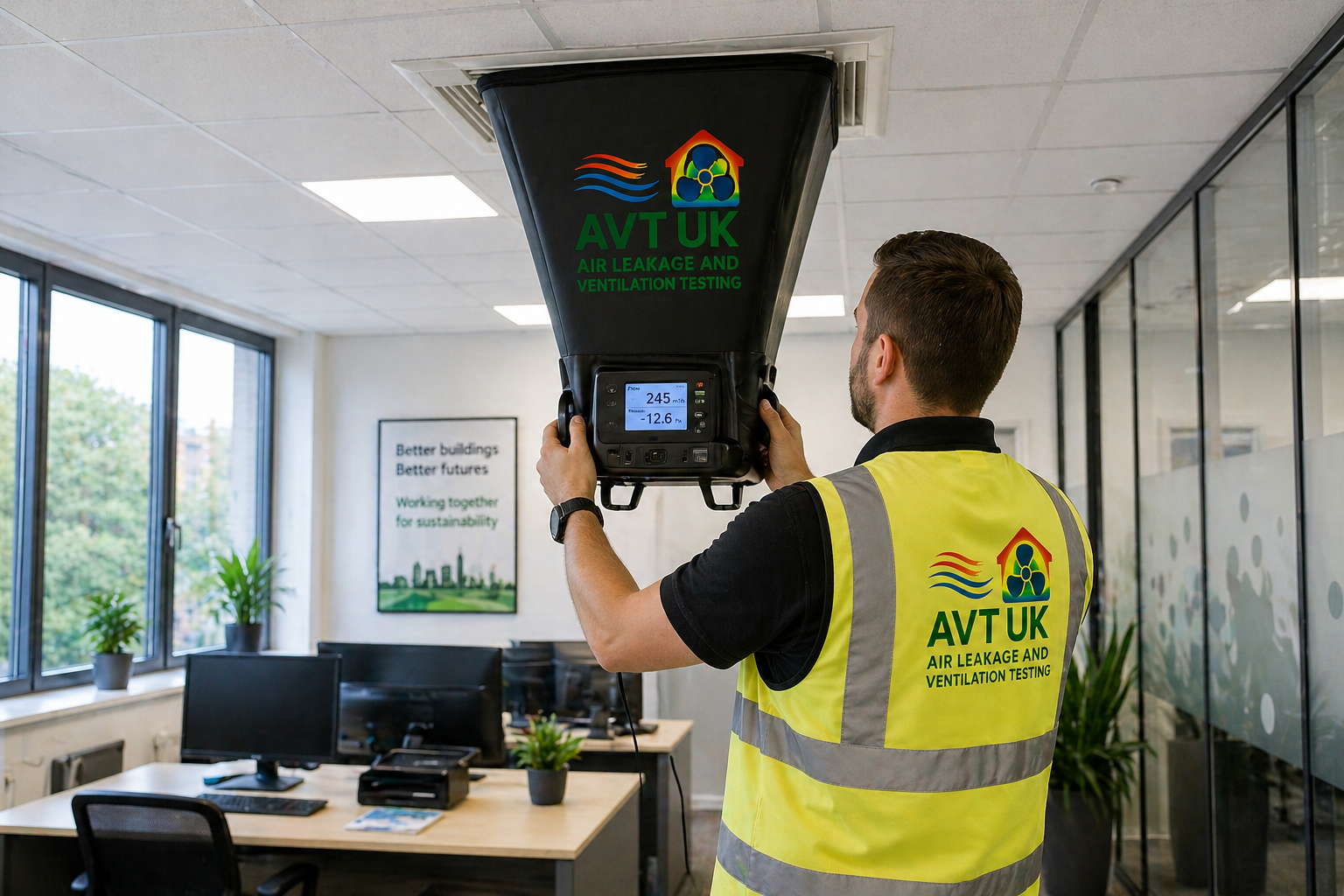
Built Around Public Sector Sites
Public sector buildings are rarely simple to access or test.
You may need to work around:
- School hours and term dates
- Patient care and clinical spaces
- Staff working areas
- Public access
- Security requirements
We keep the process practical, with:
- Flexible scheduling
- Clear communication with site teams
- Straightforward reporting
- Practical advice your team can act on
Book Your Public Sector Building Assessment
If you’re responsible for a school, healthcare building, council property, or government site, we can help you understand how it’s performing and where improvements are needed.
Call 0161 706 1401 or send a message online – we’ll respond quickly and talk you through the next step.