
If your home or building feels cold, drafty, uncomfortable, or isn’t performing as expected, there’s usually an underlying issue with heat loss, air leakage, or ventilation.
Most people have an idea when their home or building isn’t performing as it should.
But working out what to test, and why, can be confusing. And it’s no wonder, when several types of energy assessment sound similar but actually do very different jobs.
If you’re planning retrofit work, getting the right assessment first matters — because PAS 2035 expects improvements to be based on evidence, not best guesses.
This guide explains what each assessment is designed to measure, when it’s useful, and how to decide what actually applies to your home or building, before you spend any money on work that doesn’t address the real cause of the problem.
Types of Building Energy Assessment and What They Tell You
When you start looking into building energy assessments, it can feel like everything overlaps. Different names. Different reports. Different promises. But there’s often not much clarity on which exact assessment will help with the specific problem you’re dealing with.
Each assessment focuses on a different aspect of building performance, from heat loss and air leakage to ventilation and overall efficiency.
They often overlap, but they don’t all tell you the same thing.
Knowing what each type of assessment measures can help you choose the right type of building or home energy assessment for your needs.
In the sections below, we’ll break down the main assessment types. We’ll give you a full, jargon free explanation of what each one is designed for, and which would be the most useful for the situation you’re dealing with.
Energy Efficiency Testing and EPC Assessments
Energy efficiency testing is often the first thing people come across when they start looking into building performance.
Reports produced by domestic energy assessors, such as EPC assessments and energy ratings, are widely used. And in the right context, they can be genuinely useful.
An EPC assessment gives you a broad view of how energy efficient your home or building is expected to be.
It looks at things like insulation, heating systems, glazing, and ventilation as part of an overall model, then produces a recognised building energy rating.
What’s important to understand is that this information is descriptive, not diagnostic.
These elements are assessed using standardised data and assumptions rather than by testing how the building performs in real conditions. They don’t test what’s actually happening in your building, such as where air is getting in or out, or how heat is escaping in normal day-to-day conditions.
That distinction matters for retrofit projects, where PAS 2035 requires decisions to be backed by how the building actually behaves, not just how it’s expected to perform on paper.
EPC assessments and standard energy efficiency testing are most useful when you need:
- Tick the required boxes for sales, rentals, or compliance.
- See how one building stacks up against another on paper.
- Get a broad sense of efficiency before looking at more detailed testing.
EPCs assessments and standard energy efficiency testing won’t tell you:
- Whether air is leaking through gaps around windows or doors.
- How much heat is escaping through specific parts of the building fabric.
- If ventilation is pulling more warm air out than intended.
- Why certain rooms feel colder or harder to heat.
- What’s driving your high gas or electric bills.
Air Leakage Testing – For Cold Buildings and Drafty Houses
If your home or building is well insulated but still feels cold, drafty, or uncomfortable, the problem is often air leakage.
This allows warm air to escape and cold air to enter through gaps you can’t see. The result is a building that feels harder to heat than it should be, with heating systems working longer and harder to compensate.
Air leakage commonly happens around:
- Tiny gaps in windows and doors.
- Service penetrations for pipes, cables, and ductwork.
- Junctions between walls, floors, and roofs.
You won’t see where the air is escaping, but you’ll feel it when temperatures drop or the wind picks up.
Air leakage testing looks at how much uncontrolled air is moving through the building envelope. It helps confirm whether drafts, comfort issues, and higher heating demand are being caused by air escaping, rather than by insulation or heating systems alone.
In retrofit work, this is especially important, because improving insulation without understanding air leakage can lead to comfort issues or moisture problems elsewhere.
Air leakage testing is most useful when you need to:
- Confirm whether drafts are being caused by air escaping through gaps.
- Understand why a building still feels cold after insulation or retrofit work.
- Identify whether air leakage is contributing to high gas or electric bills.
- Check whether uncontrolled air movement is undermining efficiency.
- Support decisions about sealing or airtightness improvements.
Air leakage testing won’t tell you:
- Where heat is escaping through walls, roofs, or floors.
- Whether insulation levels are performing as expected.
- If ventilation systems are removing too much warm air.
- How heat loss varies across different parts of the building.
If air leakage isn’t the primary cause, other types of building energy assessment can provide the evidence needed to understand what’s happening elsewhere in the building.
Air leakage can be measured in three different ways — air tightness testing, pulse air testing, and ultrasonic air leak detection. Choosing the right approach depends on the level of detail you need. We’ll explain all three of these types of air leakage testing below.
The Three Types of Air Leakage Testing
1. Air Tightness Testing
Air tightness testing is one type of air leakage test used to understand how leaky a building is overall. Rather than looking at individual gaps or cold spots, it gives you a single, standardised measure of how much air is escaping through the building envelope as a whole.
This type of testing is most commonly linked to compliance, particularly on new builds, but it can also be useful when you need a clear benchmark for air leakage to understand whether it’s likely to be affecting comfort and energy use.
Air tightness testing works by creating controlled test conditions and measuring how much air passes through the building envelope. The result is a single figure that represents the building’s overall airtightness, making it easy to compare against targets or regulatory requirements.
Air tightness testing is most useful when you need to:
- Demonstrate compliance on new builds.
- Meet Part L or other sign-off requirements.
- Provide certification for handover or completion.
- Carry out quality checks after construction or refurbishment work.
- Understand whether air leakage is contributing significantly to heat loss.
- Use air tightness results as evidence to support PAS 2035 retrofit decisions and demonstrate that fabric changes are properly understood.
Air tightness testing won’t tell you:
- Exactly where air is leaking within your home or building.
- Which specific gaps or junctions are causing the problem.
- How air leakage differs between individual rooms or areas.
So, air tightness testing gives you a clear, recognised measure of how airtight your home or building is overall, helping confirm whether air leakage is contributing to heat loss. But it doesn’t show exactly where air leaks are coming from or what needs fixing to make your building warmer and reduce your energy bills.
That’s why it’s often used alongside pulse air testing, which helps show where air leakage is having the biggest impact. We’ll cover that next.
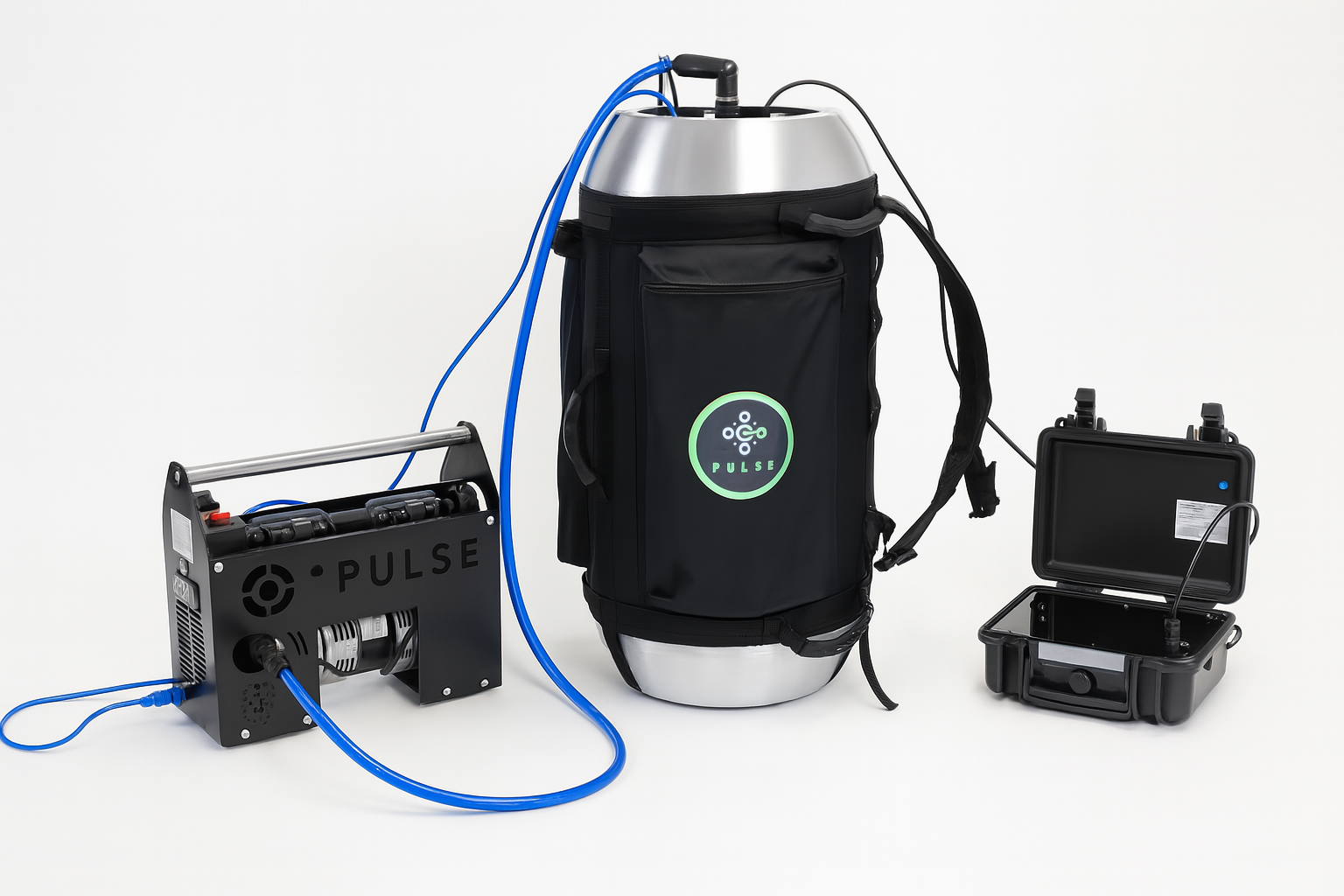
2. Pulse Air Testing
Pulse air testing is the second type of air leakage test.
Rather than giving you a single overall airtightness score, pulse air testing shows which parts of your home or building are contributing most to air leakage — and therefore driving heat loss
It’s designed to give you practical insight you can act on, rather than a pass-or-fail style result.
The test works by introducing a short burst of air and measuring how your home or building responds. From that response, you can see how easily air is leaking and which parts of the building are most responsible.
This makes pulse air testing helpful when you already know air leakage is an issue and want clear direction on what to prioritise to reduce heat loss and energy bills.
This kind of insight is particularly useful in retrofit projects. PAS 2035 expects improvements to be planned in the right order, rather than tackling measures in isolation.
Pulse air testing is most useful when you need to:
- Identify which areas of the building are contributing most to air leakage and heat loss.
- Investigate why your home or building still feels cold despite improvement work.
- Assess air leakage in occupied buildings without disrupting day-to-day use.
- Decide what to prioritise to improve warmth and reduce energy costs.
Pulse air testing won’t tell you:
- Whether your building passes air tightness requirements.
- Whether it meets Part L or other sign-off regulations.
- Whether it’s ready for handover or completion.
- How it compares for compliance or certification purposes.
So, pulse air testing helps you move from knowing there’s an air leakage problem to understanding which parts of the building are driving it — and where further investigation is worth focusing.
That’s why pulse air testing is often used alongside ultrasonic air leak detection. Pulse testing shows which areas are driving air leakage, and ultrasonic testing then pinpoints the exact gaps or seals that need attention. More on ultrasonic testing next.
3. Ultrasonic Air Leak Detection
Ultrasonic air leak detection is used when you need to find the exact locations where air is escaping.
Once you know air leakage is an issue — either from air tightness testing or pulse air testing — ultrasonic testing is what allows you to track leaks down to specific gaps, seals, or junctions.
The test works by detecting the high-frequency sound created as air escapes through small openings. You won’t hear it yourself, but the equipment can, allowing leaks to be traced precisely without sealing the building or disrupting normal use.
Ultrasonic air leak detection is most useful when you need to:
- Find the exact gaps or seals causing air leakage.
- Target sealing work accurately instead of guessing.
- Investigate why a building failed an air tightness test.
- Check whether previous sealing or retrofit work has been effective.
- Identify leaks in occupied or sensitive environments without disruption.
Ultrasonic air leak detection won’t tell you:
- How airtight your home or building is overall.
- Whether you meet air tightness compliance targets.
- How heat is escaping through walls, roofs, or floors.
- Whether ventilation systems are performing correctly.
So, ultrasonic air leak detection is about precision. It shows you exactly what needs fixing once you know air leakage is part of the problem — making it a natural follow-on from pulse air testing or air tightness testing.
Ventilation Testing
Ventilation plays a big role in how comfortable and energy efficient your home or building is — even when problems aren’t immediately obvious.
Too little ventilation can leave air feeling stale or damp. Too much can pull warm air out faster than it should, driving heating demand and energy bills up.
Ventilation testing checks whether ventilation systems are working as intended for how the building is actually used. It focuses on getting the balance right, rather than tightening a building up without understanding how air is meant to move through it.
PAS 2035 places a strong emphasis on this balance, because changes to insulation or airtightness without proper ventilation checks can create new problems instead of solving old ones.
The test looks at how air is deliberately supplied and removed, confirming whether airflow levels match the building’s design and use.
That matters because even with good insulation and airtightness, poor ventilation can still lead to condensation, higher heating demand, or spaces that simply don’t perform as they should.
Ventilation testing is most useful when you need to:
- Check whether ventilation systems are delivering appropriate airflow for how the building is actually used.
- Confirm airflow levels are right for the size, layout, and purpose of the space.
- Understand whether ventilation is increasing heat loss and energy demand.
- Investigate issues like stale air, condensation, or spaces that don’t perform as they should.
- Check whether recent insulation or airtightness work has affected ventilation balance.
- Understand whether condensation or damp problems are being caused by poor airflow, rather than leaks or fabric defects.
Ventilation testing won’t tell you:
- If air is leaking through gaps or cracks in the building fabric.
- How airtight your home or building is as a whole.
- Where heat is escaping through walls, roofs, or floors.
- Whether air tightness testing or compliance requirements have been met.
So, ventilation testing helps you understand whether your ventilation setup is supporting comfort and energy performance — or working against it — but it doesn’t replace air leakage or thermal heat loss testing.
That’s why it’s often used alongside those assessments, giving you a clearer picture of how air is being brought in, moved around, and removed from your home or building.
Thermal Heat Loss Surveys
Sometimes the main problem isn’t air movement at all — it’s heat passing straight through the structure of the building.
If walls, roofs, or floors aren’t performing as they should, heat will escape continuously, no matter how efficient the heating system is. You can keep turning the heating up, but the building simply won’t hold onto the warmth.
A thermal heat loss survey is designed to show you where heat is escaping through the building fabric and how significant that loss really is.
Using specialist thermal imaging, the survey reveals how heat loss varies across walls, roofs, and floors. This makes it much easier to understand why a space feels cold, why heating demand stays high, or why recent insulation or retrofit work hasn’t delivered the improvement you expected.
Rather than relying on drawings, specifications, or what should be happening, you get clear, real-world evidence of how the building fabric is actually performing.
For PAS 2035 retrofit work, this kind of evidence helps justify fabric improvements and avoids spending money on measures that won’t deliver the results you’re aiming for.

A thermal heat loss survey is most useful when you need to:
- See exactly where heat is escaping through your walls, roofs, or floors.
- Understand whether your insulation is performing as intended.
- Investigate cold areas or uneven temperatures across your home or building.
- Check why heating demand remains high despite other improvements.
- Choose insulation or fabric upgrades that will make a real difference.
- Avoid unnecessary or poorly targeted work.
A thermal heat loss survey won’t tell you:
- Whether air is leaking through gaps or cracks in your home or building.
- How airtight your home or building is overall.
- Whether your ventilation systems are performing correctly.
- Whether air tightness or compliance targets have been met.
So, a thermal heat loss survey helps you understand how the building fabric itself is performing — but it doesn’t replace air leakage or ventilation testing.
That’s why it’s often used alongside those assessments, giving you a complete picture of how heat is being lost, how air is moving, and where improvements will actually make the biggest difference.
Choosing the Right Energy Assessment for Your Needs
The right building energy assessment depends on the problem you’re trying to solve.
If you’re working within a PAS 2035 retrofit framework, this step is even more important, because the standard expects you to understand the building properly before deciding on measures.
If you’re unsure where to start, think about why you’ve arrived at this page. Is it comfort problems, higher bills, or the need for a rating or sign-off?
That reason should point you toward the right type of assessment to start with:
- If you need an official rating for selling, renting, compliance, or a general overview of efficiency
→ Energy efficiency testing or an EPC gives you a broad rating based on your home or building’s details. - If your home or building feels drafty, hard to keep warm, or is expensive to heat
→ Air leakage testing helps confirm whether air is escaping where it shouldn’t: -
- Air tightness testing gives you a single result showing how leaky the building is overall, often needed for sign-off.
- Pulse air testing helps show which parts of your home or building are contributing most to air leakage and heat loss.
- Ultrasonic air leak detection pinpoints the exact gaps or seals that need fixing.
- If some rooms never seem to warm up, or your heating bills stay high even after insulation work
→ A thermal heat loss survey shows where heat is passing straight through walls, roofs, or floors. - If you’re dealing with condensation, air quality issues, or inconsistent conditions even though insulation and airtightness are decent
→ Ventilation testing checks whether airflow is appropriate for how the building is actually being used
In many situations, the best results come from using more than one assessment. Start with the test that best matches why you’re here. That might be comfort problems, high energy costs, or the need for a rating or sign-off.
From there, use the results to decide whether anything else is needed. This keeps decisions evidence-led and helps you focus on improvements that actually make your home or building more comfortable, efficient, and easier to run.
Still Not Sure Which Energy Assessment You Need?
If you’re still weighing things up, you’re not expected to have all the answers.
Choosing the right building energy assessment isn’t always obvious, especially when comfort issues, high energy bills, EPC ratings, and compliance requirements can overlap.
If you’re planning retrofit work under PAS 2035, we can also help you decide which assessments will support the process properly — without unnecessary testing or wasted spend.
Talk it through with our team at AVTUK first.
We’ll ask a few straightforward questions about your home or building, what you’re trying to achieve, and what problems you’re dealing with.
From there, we’ll help you decide whether you need an EPC, air leakage testing, ventilation testing, a thermal heat loss survey — or a combination in the right order.
No pressure. No upselling. Just clear advice so you can move forward with confidence.
Call 0161 706 1401 or send us a message online — and we’ll help you choose the best assessment for your needs.