
Retrofit Projects Come With More Unknowns
If you’re working on a retrofit project, you’re dealing with an existing building – not a blank slate.
That means hidden issues, inconsistent construction, and more risk when it comes to compliance and performance.
Air tightness and ventilation don’t behave the way you expect in older properties. If it’s not tested properly, problems tend to show up late — when they’re harder (and more expensive) to fix.
We work with retrofit contractors, coordinators, and project teams to help you meet PAS 2035 requirements, improve performance, and avoid issues at sign-off.
Most retrofit issues don’t show up on drawings – they show up on site. By the time they’re visible, you’re already working around finishes, access restrictions, and programme pressure. That’s why testing early – and understanding what’s actually happening in the building – makes a big difference.
Avoid Compliance Issues And Costly Rework
Retrofit projects come with more uncertainty than new builds.
You’re working with existing structures, existing materials, and often incomplete information.
That’s what creates problems.
Common issues we see include:
- Uncontrolled air leakage through older building fabric
- Poorly installed or inconsistent insulation upgrades
- Ventilation systems that don’t match the building’s new airtightness levels
- Moisture risks caused by sealing without proper airflow
- Gaps and junctions that weren’t addressed during retrofit works
If these aren’t picked up early, they can lead to:
- Failed compliance checks
- Damp and mould issues after handover
- Tenant complaints
- Costly remedial work
We help you identify and deal with these issues before they become bigger problems.
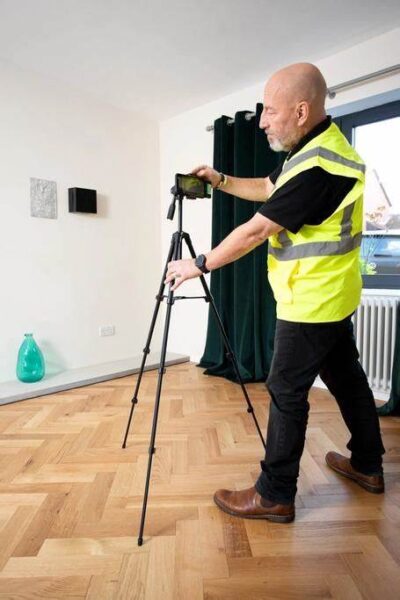
Air Tightness Testing For Retrofit Projects
Air tightness testing measures how much uncontrolled air is leaking through the building — which is critical in retrofit work.
As buildings are upgraded and sealed, airflow patterns change. Without proper testing, you don’t know how the building is actually performing.
Our testing helps you:
- Understand real building performance – not assumptions
- Meet PAS 2035 and retrofit compliance requirements
- Identify areas where air leakage is still occurring
- Support energy efficiency improvements
- Reduce heat loss and improve comfort for occupants
We don’t just give you a result. We explain what’s happening and what needs to be improved.
What Happens During A Retrofit Air Test?
We use specialist equipment to measure how air is moving through the building — before and after retrofit works if needed.
The process involves:
- Sealing intentional openings
- Installing calibrated fan equipment
- Pressurising and depressurising the building
- Measuring air leakage rates
This gives you a clear picture of how the building is performing in real conditions.
For retrofit projects, this is especially important – because improvements on paper don’t always match what’s happening in reality.
When Is Testing Required In Retrofit Projects?
Testing is often required as part of PAS 2035 compliance and retrofit validation.
But more importantly, it should be used to confirm that the improvements you’ve made are actually working.
Leaving testing too late creates risk.
If issues are found at the end of the project:
- Access is limited
- Finishes may need to be removed
- Costs increase
- Delays build up quickly
We can support earlier in the process, helping you reduce that risk and avoid surprises.
Ventilation Testing And Retrofit Compliance
Improving airtightness without addressing ventilation is one of the biggest mistakes in retrofit.
Too much sealing without proper airflow leads to:
- Condensation
- Damp and mould
- Poor indoor air quality
- Long-term issues for occupants
We carry out ventilation testing to make sure airflow is balanced and compliant.
This helps you achieve what retrofit is supposed to do:
Improve efficiency without creating new problems.
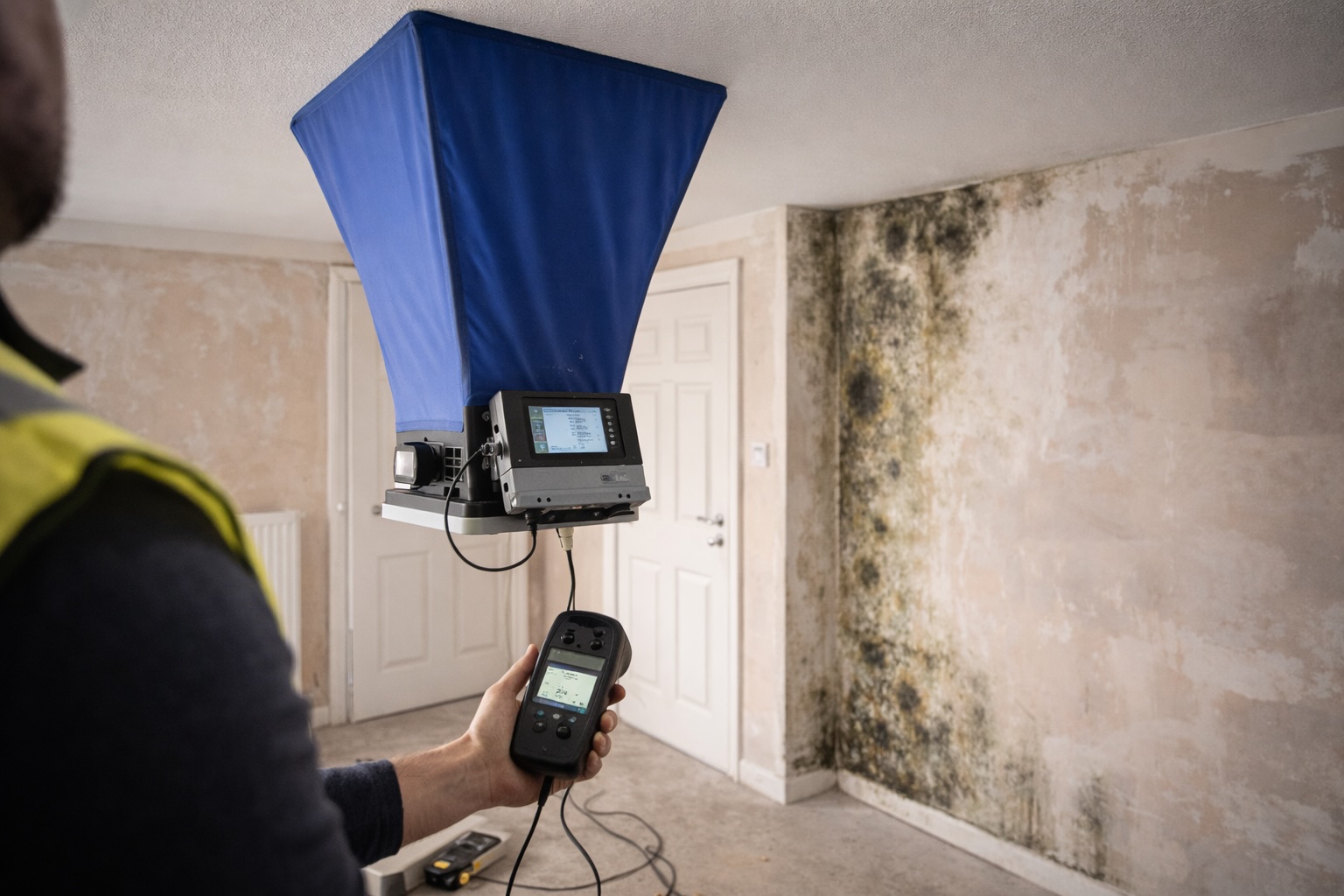
Energy Efficiency Support For Retrofit Projects
Retrofit isn’t just about ticking compliance boxes.
It’s about making buildings perform better in real life.
We support retrofit teams by:
- Identifying where heat is being lost
- Highlighting areas that still need improvement
- Providing practical, cost-effective recommendations
This helps you:
- Meet compliance requirements
- Improve building performance
- Avoid post-installation issues
- Deliver better outcomes for occupants
Built Around How Retrofit Projects Actually Work
Retrofit projects don’t follow a perfect sequence.
You’re dealing with:
- Occupied properties
- Phased works
- Access limitations
Unexpected issues behind walls and finishes, we understand that.
So we keep things simple:
- Flexible scheduling around your programme
- Clear, direct communication with your team
- Practical advice that works on real buildings
We focus on helping you get the job done properly – without slowing the project down.
Building Performance Starts With The People Doing The Work
Testing can show you how a property is performing, but good retrofit starts much earlier than that.
The installers, supervisors and managers working on the project all have a part to play in getting the details right. Insulation, airtightness, windows, ventilation and other improvements need to work together if the finished property is going to perform as expected.
Our sister company, Train 4 Growth, provides retrofit training courses and NVQ qualifications for individuals and businesses working across the retrofit sector.
By combining a skilled workforce with the right building performance testing, contractors and housing providers can have greater confidence that retrofit measures have not only been installed, but are actually delivering the intended result.
Book Your Air Tightness or Ventilation Test
If you’re working on a retrofit project – or planning one – we can help you make sure it performs as expected and meets compliance requirements.
Call 0161 706 1401 or send a message online – we’ll respond quickly so your project keeps moving.