
When your tenant reports mould, you need to take it seriously.
Cleaning the wall, sending advice about opening windows or asking your tenant to turn the heating up is highly unlikely to solve the problem.
Before deciding who is responsible, you need to understand why the mould is forming.
Your response matters for your tenant’s health, the condition of your property and your ability to show that you acted properly.
What Is Your Responsibility as a Landlord When it comes to Mould?
As a landlord in England, you must keep your rented property fit for human habitation and free from serious hazards.
Damp, mould and excess cold can all affect whether a home meets that standard. These landlord responsibilities sit alongside your tenant’s right to live in a safe and healthy home.
Your landlord responsibility for mould may apply where the problem is linked to:
- Leaking pipes, roofs or gutters
- Poor insulation or cold surfaces
- Faulty or inadequate ventilation
- Structural defects or water penetration
- Heating problems or excessive heat loss
Since 22 June 2026, councils have been able to issue fines of up to £7,000 where landlords fail to deal with serious hazards, including severe damp and mould.
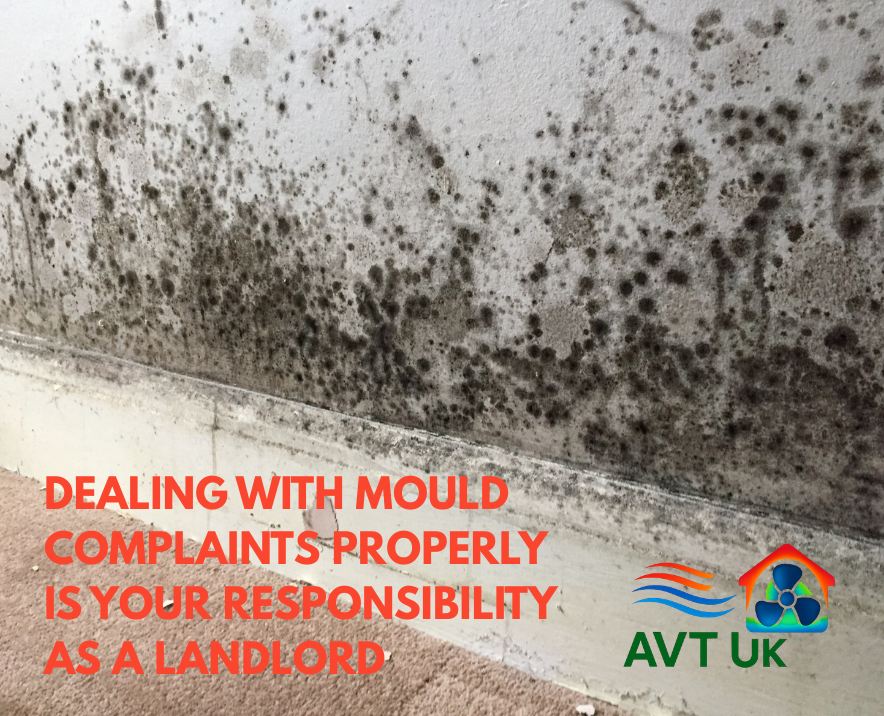
What Should You Do When Your Tenant Reports Mould?
Acknowledge the report in writing and arrange an inspection. Ask where the mould is appearing, when it started and whether it returns after cleaning.
Do not jump straight to blaming your tenant. Cooking, washing and drying clothes create moisture, but your property should have suitable heating, insulation and ventilation to manage normal everyday use.
Check for leaks, cold walls, damaged insulation, ineffective extractor fans and blocked or missing background ventilation. Once you understand the cause, you can arrange the right work rather than repeatedly treating the surface. Government guidance advises landlords to respond quickly, investigate the cause and follow up after work has been completed.
How Can You Find the Cause of Damp and Mould?
Different problems need different evidence.
- Switchee smart monitoring can provide live and historical information about temperature and humidity, helping you spot patterns and identify properties at greater risk.
- A Ventilation Compliance assessment can check whether extractor fans, background ventilators and airflow are performing properly.
- Air Tightness Testing can identify uncontrolled air leakage that may leave rooms difficult to heat and more vulnerable to cold surfaces.
- A Heat3D Thermal Heat Loss Survey can reveal insulation gaps, thermal bridging and areas where heat is escaping through the building fabric.
You may not need every service. The aim is to choose the right assessment and get clear evidence before paying for remedial work.
How Can Landlords Prove They Have Acted on Damp and Mould Reports?
Keep a clear record from the first report onwards, including:
- Your tenant’s original message and photographs
- Your replies and inspection dates
- Notes, photographs and property readings
- Contractor reports, survey results and invoices
- Details of repairs and temporary action
- Requests for access
- Follow-up checks after the work
A receipt for mould cleaning only proves that the surface was treated.
For stronger evidence, you need to show that you investigated the cause, arranged appropriate work and checked whether conditions improved.
Protect Your Tenant, Your Property and Your Position
When your tenant reports mould, acting quickly is only part of your landlord responsibility. You also need to understand what is happening inside the property and keep evidence of the action you have taken.
AVT can assess ventilation, heat loss, air leakage, temperature and humidity, giving you a clearer route from tenant report to diagnosis and repair.